Over a Year After the Fall of Kabul, Afghans Continue to Lack Human Rights
- Arvin Savadkouhi
- Aug 30, 2022
- 2 min read
The harsh sun bewitched the bustling city of Kabul, Afghanistan’s capital, under a spell of parching heat. Dust crept into residential alleys and cul-de-sacs from the Humvees that brazenly-bearded members of the Taliban rode into Kabul. At Kabul’s international airport, masses of civilians, workers of the collapsed government, and foreigners alike bolted onto the tarmac, anxiously waiting for a foreign plane to arrive and carry them out of Afghanistan. Many women began hiding in their homes, fearful of leaving; additionally, many activists, singers, politicians, artists, and workers of the fallen government began hiding until they fled Afghanistan. It was mid-August 2021, and the world had simply watched as Afghans lost their rights during the summer offensive of the Taliban and the eventual collapse of the internationally-recognized Afghan government.

Over a year after the fall of Kabul on August 15, 2021, the Taliban continues to bar Afghan women and girls from educational institutions, force women and girls to wear burqas, ban women and girls from leaving their homes without a male relative, vandalize and remove pictures of women and girls in the public sphere, ban virtually all mediums of culture (such as music and dancing), persecute religious minorities, kill the Hazara people, and target (and sometimes assassinate) activists and aid workers.
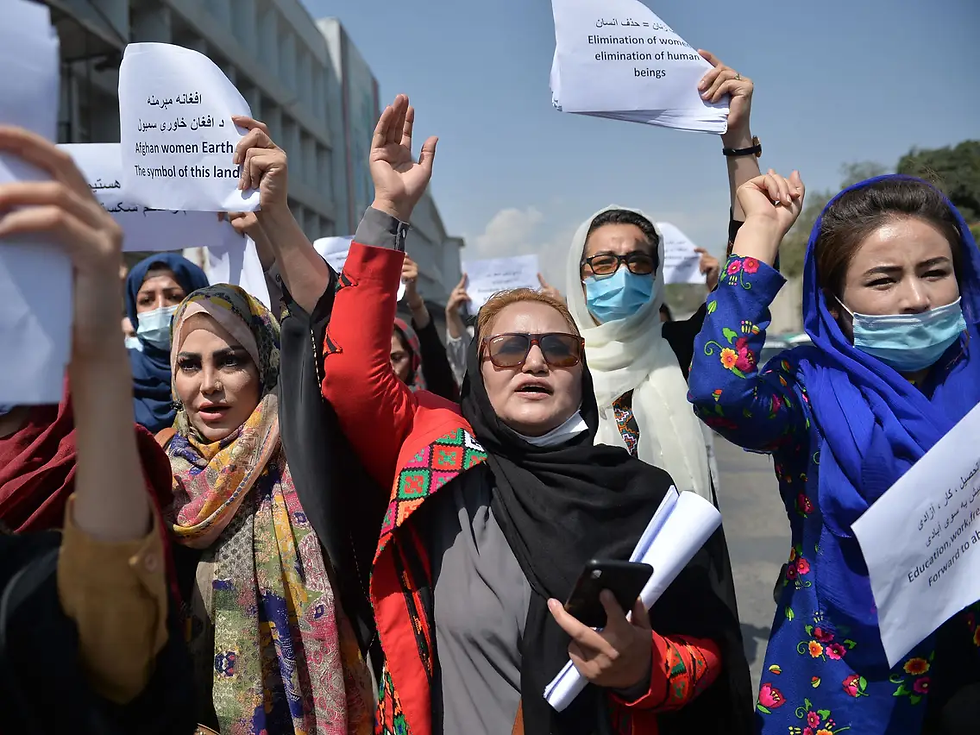
It is important to note that people in Afghanistan continue to fight back against the Taliban regime. Afghan women, men, and nonbinary people have courageously marched the streets of cities throughout Afghanistan, demanding human rights, freedom, food, security, jobs, and democracy, in protest against the Taliban. Afghans in Afghanistan with access to the Internet regularly voice their protests on social media, as well, even if their criticism is confined to anonymity. Men on Afghan TV have covered their faces with masks in a coded act of solidarity with Afghanistan’s women and girls. Afghans around the world have made it clear that the Taliban cannot, and shall not, continue to hold Afghanistan hostage. There will always be enormous amounts of resistance to the Taliban, and Afghanistan will be liberated one day.
Afghans fleeing Afghanistan have often arrived in the United States and Germany, yet Afghans continue to face many systemic hurdles and barriers in seeking refuge in both countries. For example, in the United States, President Biden has pledged to admit 100,000 Ukrainians to the U.S. as refugees; in contrast, the federal government has rejected 90% of Afghan applicants for humanitarian immigration parole. The juxtaposition of these two statistics has sparked criticism of the U.S. federal government’s refugee policies by many AMEMSA-identifying Americans.

The situation of Afghans in Afghanistan, as well as that of Afghan refugees, is dire. Non-Afghan people cannot keep allowing themselves to be desensitized to Afghan suffering. It may seem like there’s nothing anyone can do, but that’s simply not true. In the United States, for instance, private citizens can sponsor Afghan refugees to move to the U.S., under the Sponsor Circle Program. If enough people in the U.S. sponsor Afghan refugees, many livelihoods and lives will be saved. Everyone, regardless of who they are or where they live, should also remain informed about Afghanistan’s humanitarian and human rights crises.


Comments